



Install Steam
sign in
|
language
简体中文 (Simplified Chinese)
繁體中文 (Traditional Chinese)
日本語 (Japanese)
한국어 (Korean)
ไทย (Thai)
Български (Bulgarian)
Čeština (Czech)
Dansk (Danish)
Deutsch (German)
Español - España (Spanish - Spain)
Español - Latinoamérica (Spanish - Latin America)
Ελληνικά (Greek)
Français (French)
Italiano (Italian)
Bahasa Indonesia (Indonesian)
Magyar (Hungarian)
Nederlands (Dutch)
Norsk (Norwegian)
Polski (Polish)
Português (Portuguese - Portugal)
Português - Brasil (Portuguese - Brazil)
Română (Romanian)
Русский (Russian)
Suomi (Finnish)
Svenska (Swedish)
Türkçe (Turkish)
Tiếng Việt (Vietnamese)
Українська (Ukrainian)
Report a translation problem


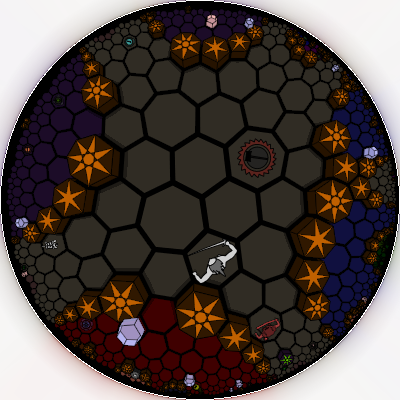
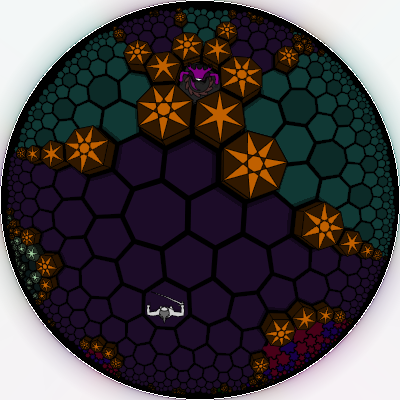 Nevertheless, there have been a lot of small updates and bugfixes since 13.0. For people who have not been following HyperRogue closely, here are some larger features:
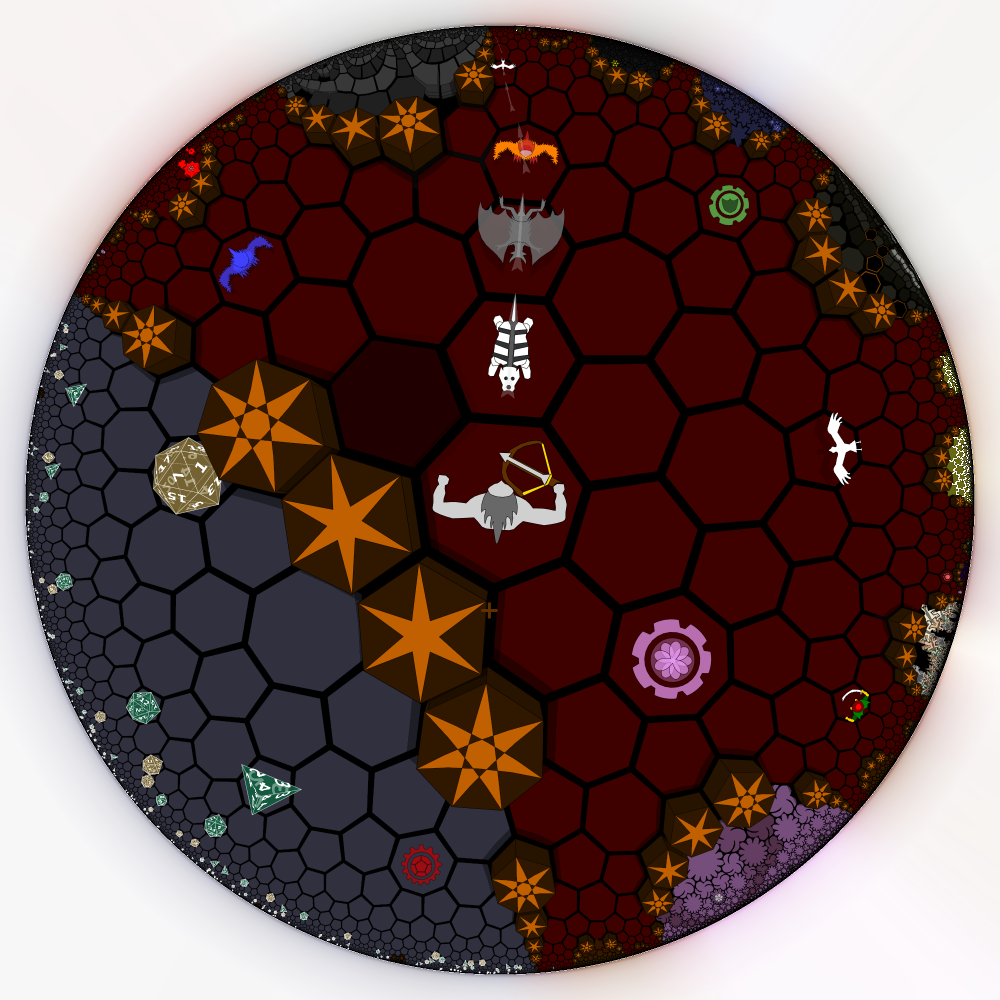 HyperRogue 13.0 includes an option to play the game with another weapon: a crossbow instead of the classic blade! A classic traditional roguelike strategy is: when attacked by an overwhelming force of multiple enemies, move into a corridor, forcing them to attack one by one; HyperRogue combines this idea with hyperbolic geometry, making this strategy work even in open space, due to the geometry of the world itself. But why use your blade to attack them one by one, when you could also have a penetrating attack that kills the whole straight line of enemies in a single shot? As a counterbalance, the crossbow takes several turns to reload.
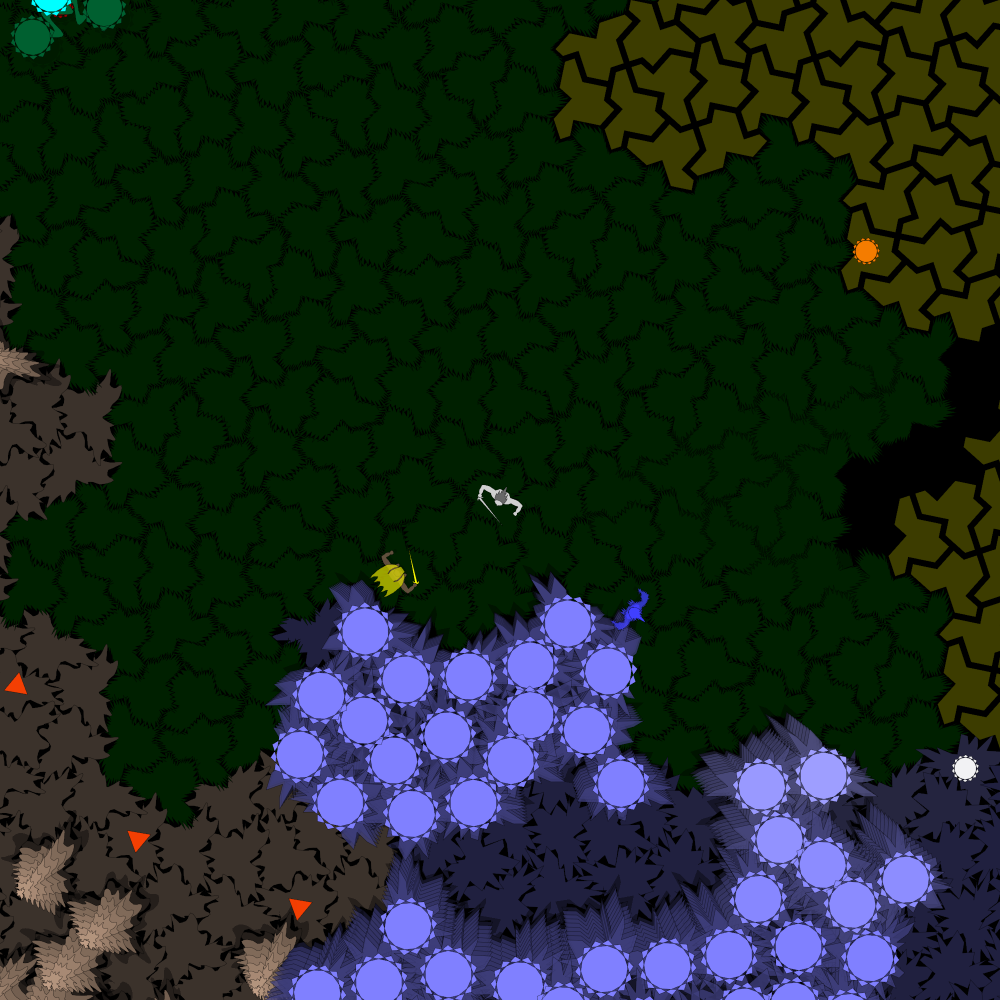 Probably the most popular mathematical discovery of 2023 was the discovery of hat
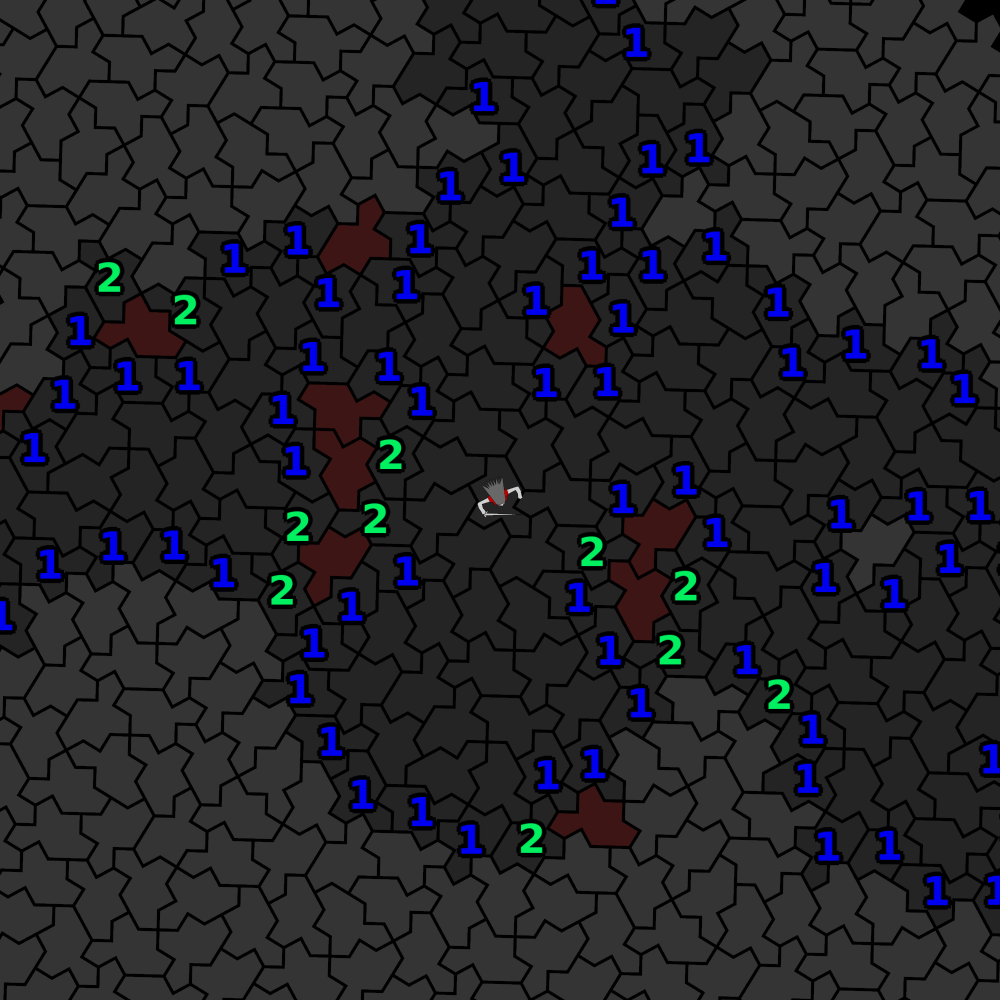 While the rules of HyperRogue are specially designed for hyperbolic geometry, you can e.g. play the Minefield land in the Hat/Spectre tiling, to get a more original variation on Minesweeper. There are more options to customize the geometry of the world -- for example, the format to specify arbitrary periodic or some horocycle-based 2D tilings
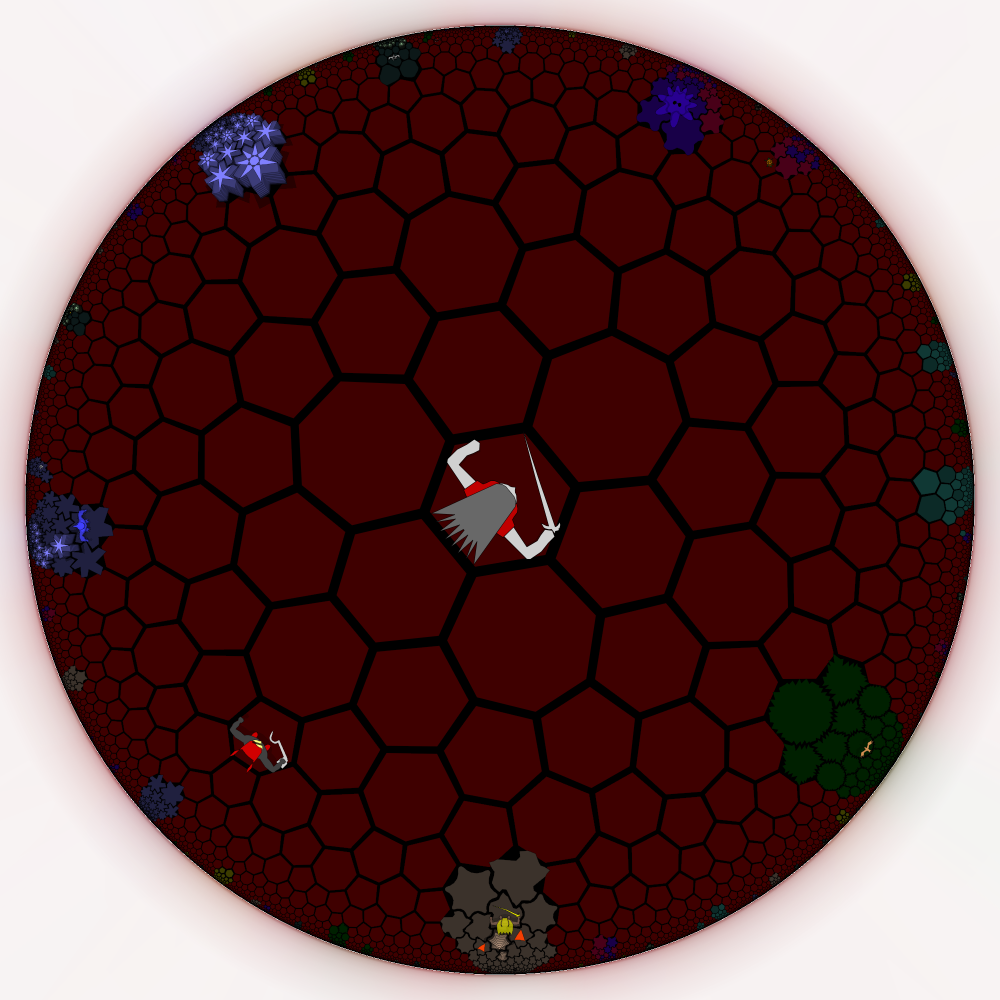 If you do not want to change the geometry of the world, you can still change how it is structured... New options shown in the images above replace the usual HyperRogue land structure (lands separated mostly by hyperbolic straight lines) with alternative ones. In one, every land is bounded by a horocycle (a shape existing only in non-Euclidean geometry that looks a bit like a circle but is actually infinite)...
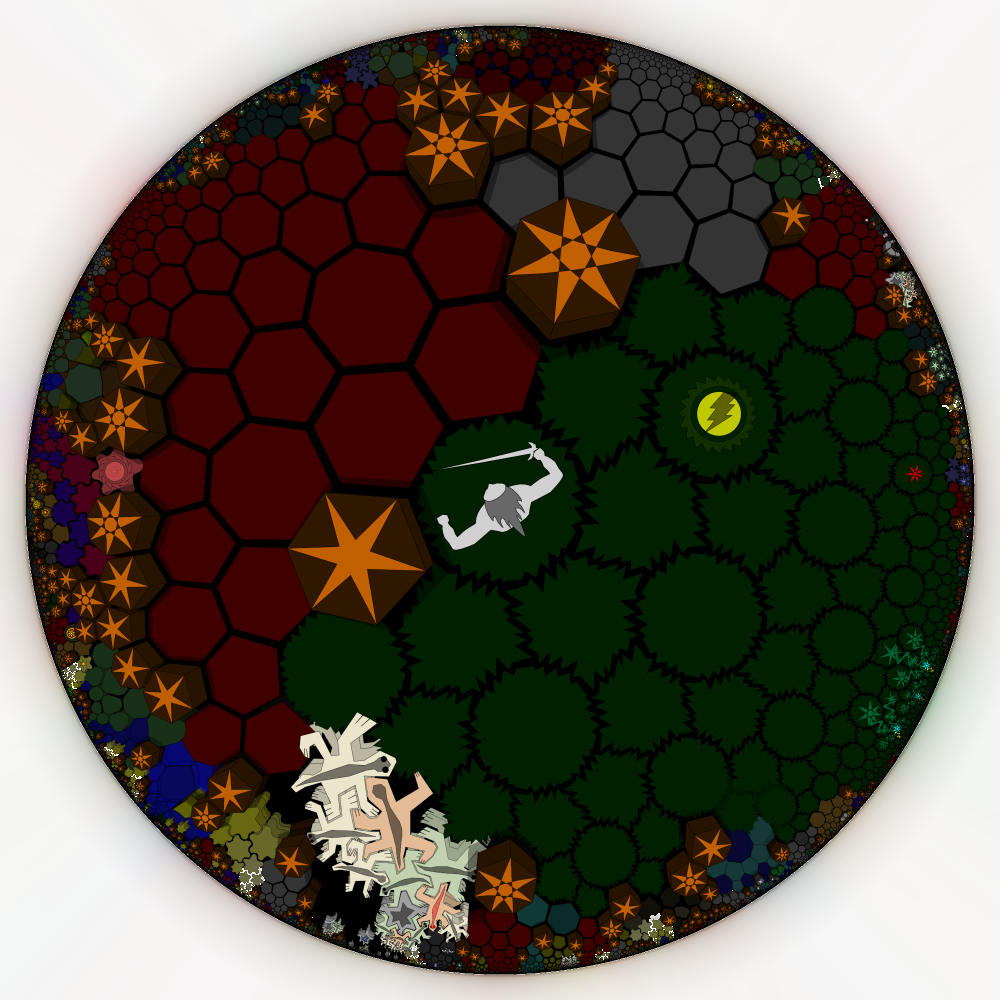 In another, the hyperbolic plane is subdivided into lands like in a Voronoi tessellation -- some points are chosen as centers, every tile gets assigned to a land depending on which center is closest to it -- but where the centers are very rare... so rare that they are infinitely away
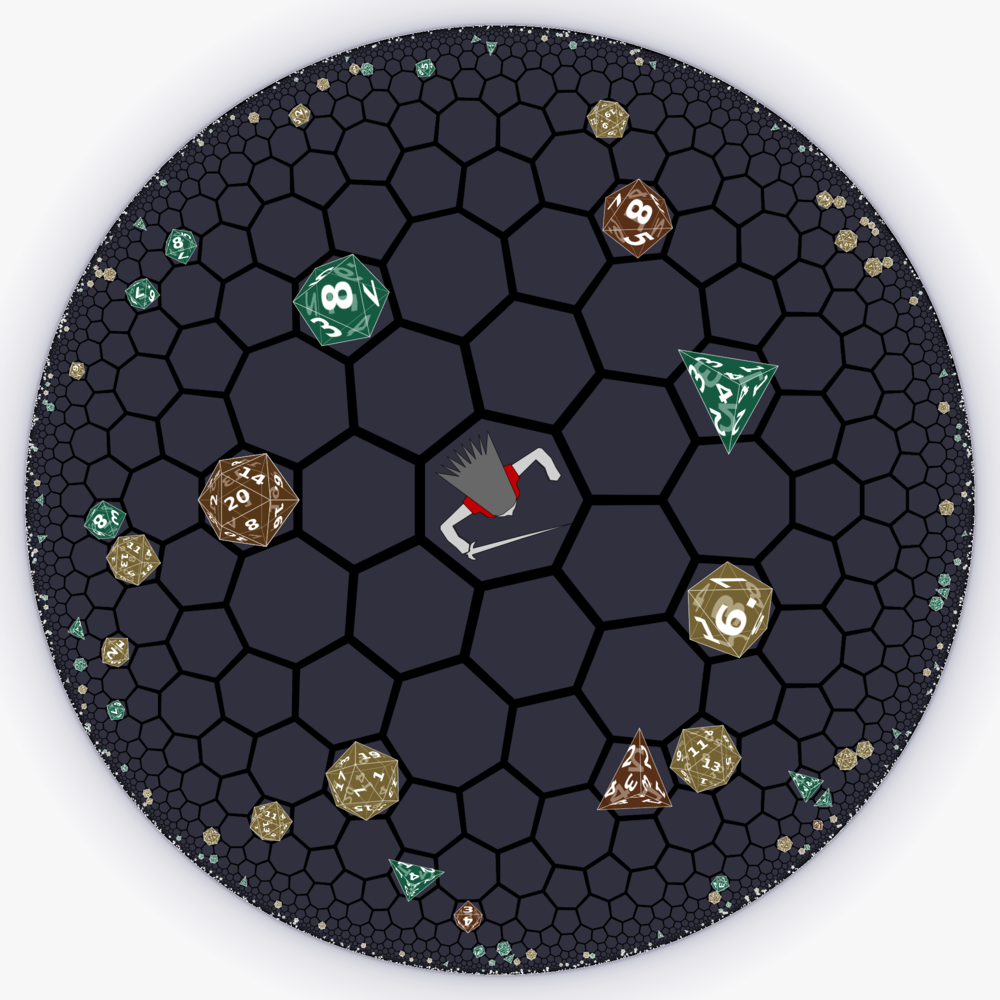 Is HyperRogue the only game where tessellations of non-Euclidean spaces play a major role? Well, no -- while the wonders of hyperbolic tessellations are rarely used, spherical tessellations can be found in any game using dice! When you roll a die and see how the numbers change, interesting things happen as a result of the difference in the geometries of the die and the surface. Many HyperRogue players are dice collectors. Why not have both?
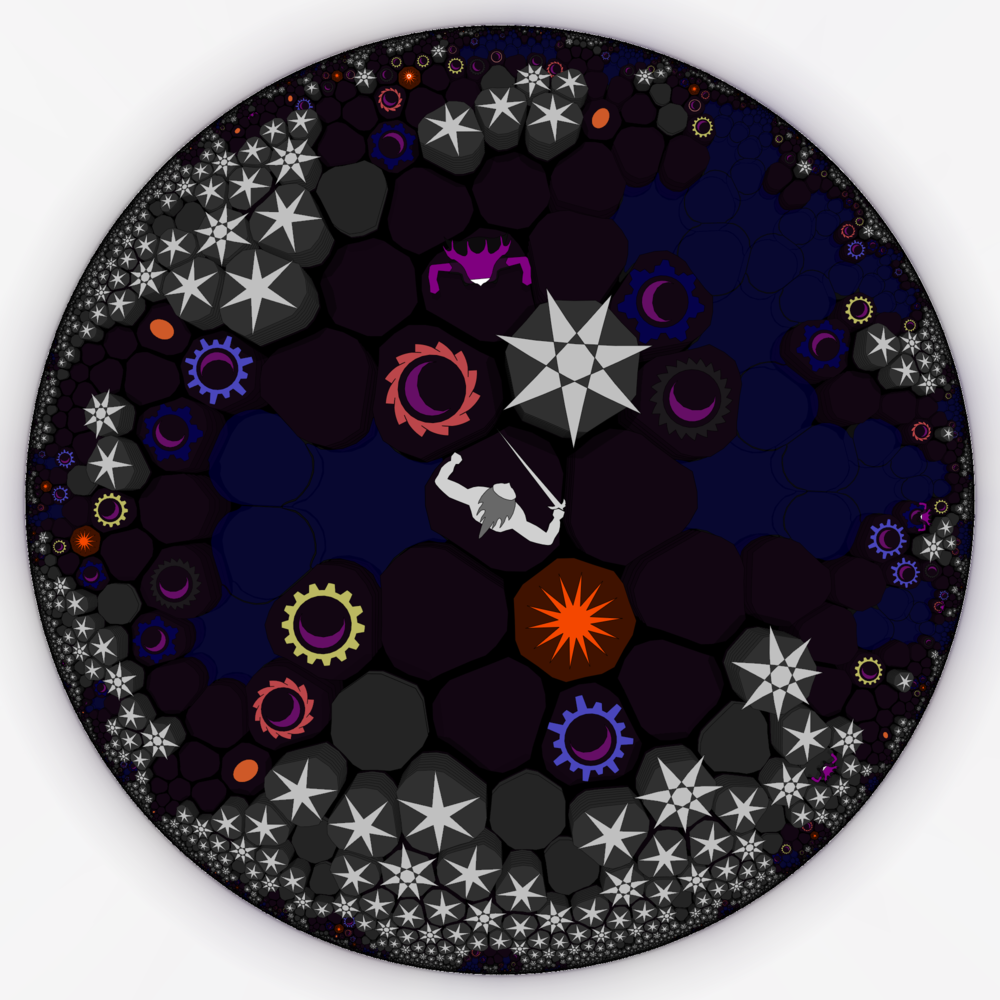 Every land in HyperRogue comes with a new Orb -- a sphere of beneficial magical power. The Cursed Canyon is a land full of Curses. Curses are similar to Orbs, but their powers are mostly negative. You may get weaker, slower, powerless, or afraid of water. You get cursed by moving over curses, or when attacked by a Canyon Hag. You are also pursued by the Shadow, already known from the Graveyard. Will you be able to survive and profit despite all the debuffs and nasty enemies?
 Loading

